i.
A.D. 1160
西暦1160年
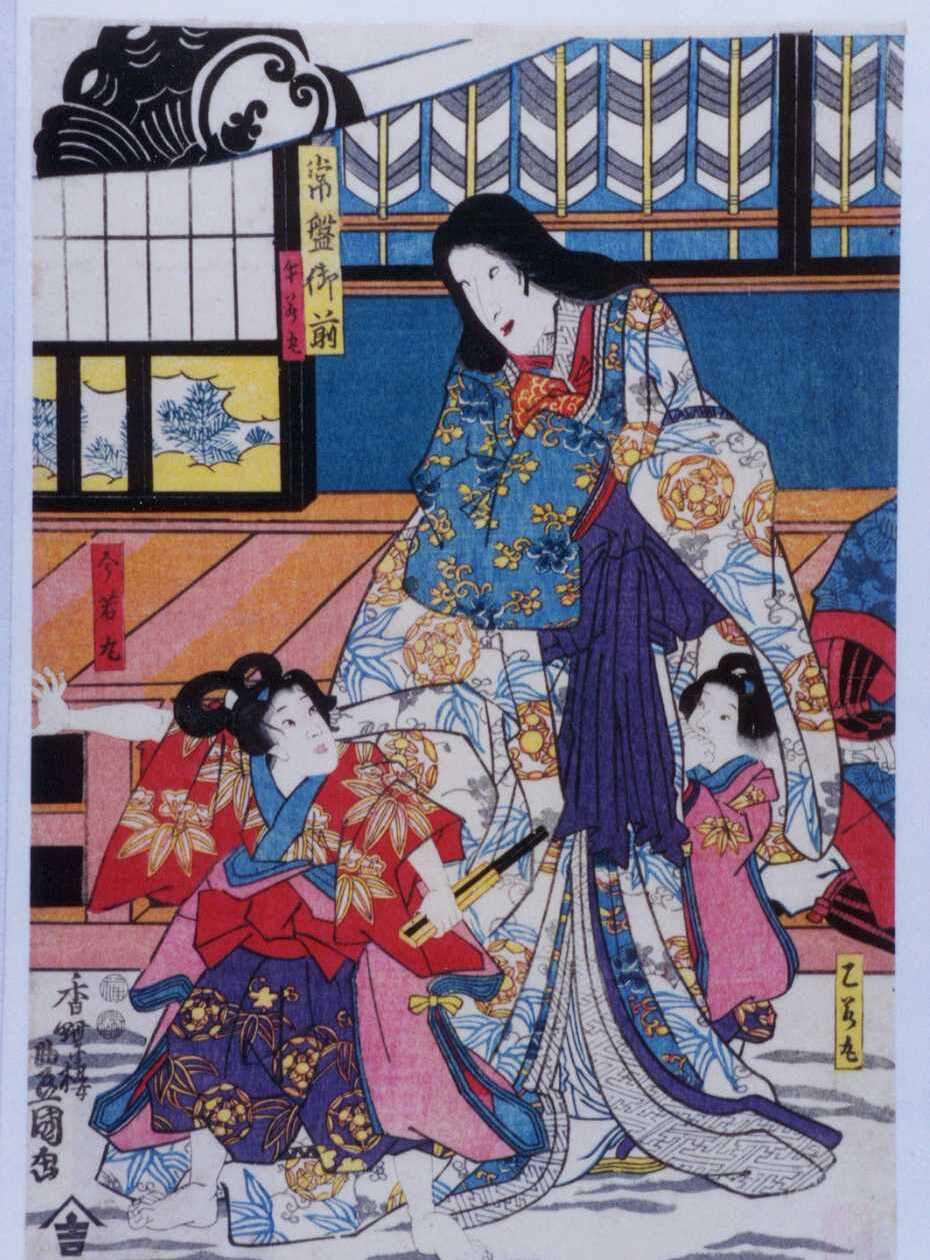
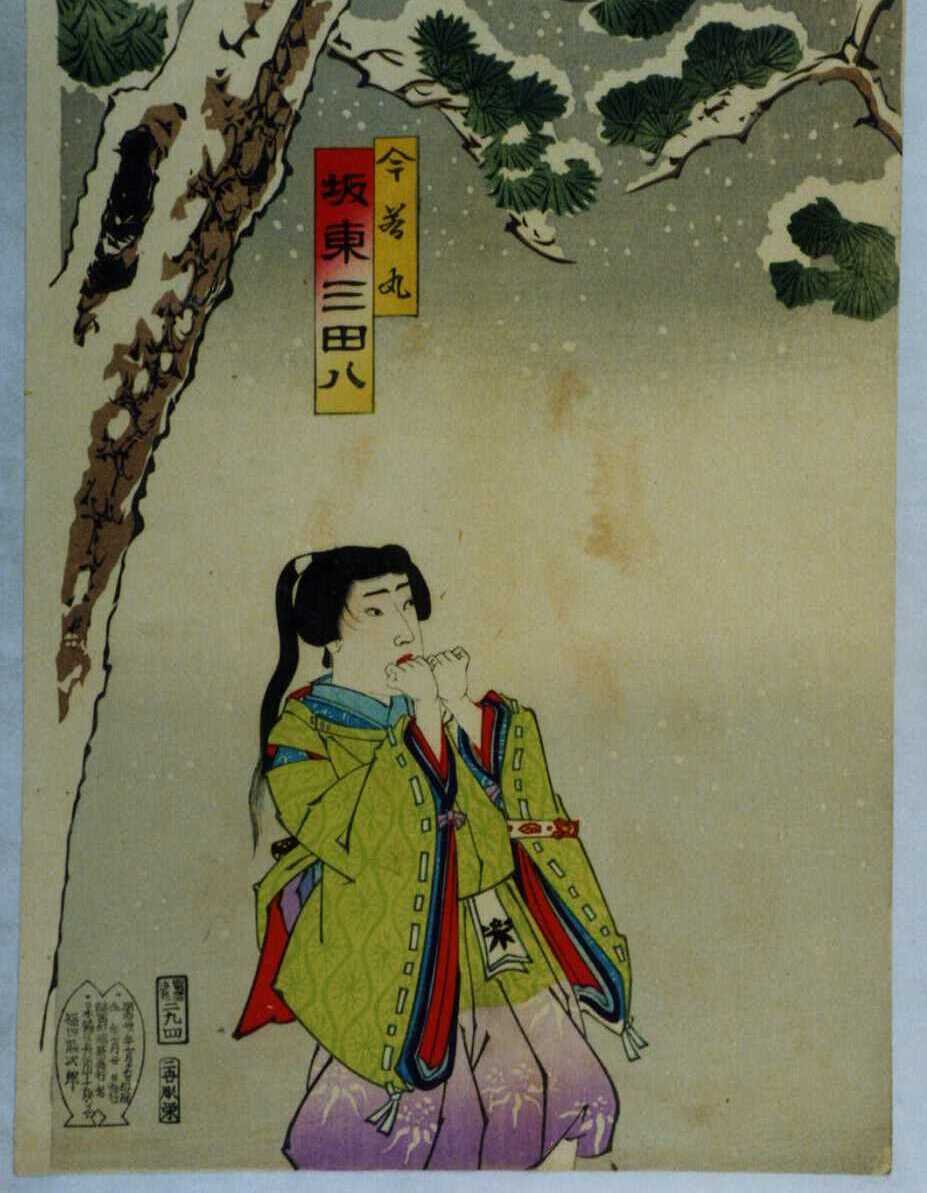
Heiji Rebellion. Minamoto no Yoshitomo is killed. His consort Tokiwa Gozen flees through deep snow with their three sons: Imawakamaru (age 7), Otowakamaru (5), and Ushiwakamaru (3). Imawakamaru (Ano Zenjo) is placed at Daigo-ji temple.
平治の乱。源義朝が討たれる。側室・常盤御前が、三人の幼子——今若丸(七歳)、乙若丸(五歳)、牛若丸(三歳)——を連れて雪中を逃れる。今若丸(阿野全成)は醍醐寺に預けられる。
Azuma Kagami · Heiji Monogatari吾妻鏡 · 平治物語
1183
Twenty-fifth day, seventh month, Jishō 7. Ano Zenjo, as head priest of Izusan (Sōtōzan Gongen), issues a deed of donation to the Jōgyō-dō hall on Sōtōzan. The reverse of the deed is inscribed Ano Hokkyō-gobō.
治承七年(一一八三)七月二五日。阿野全成、伊豆山(走湯権現)の座主を務め、走湯山上常行堂への寄進状を発給。寄進状の裏書には「阿野法橋御房」と記される。
Izusan Jinja Komonjo Utsushi · Takahashi伊豆山神社古文書写 · 高橋一樹
1185
Minamoto no Yoritomo establishes the Kamakura shogunate.
源頼朝、鎌倉幕府を開く。
Azuma Kagami吾妻鏡
1203
Ano Zenjo is executed on orders of Hōjō Tokimasa. His son Ano Tokimoto inherits Ano-no-shō (present-day Hara, Numazu) — the land the family has held for eight hundred years since.
阿野全成、北条時政の命により誅殺。子・阿野時元が阿野荘(現在の沼津市原一帯)を継承——以後八百年、家系の在る土地となる。
Azuma Kagami · Nihon Rekishi Chimei Taikei吾妻鏡 · 日本歴史地名大系
1548
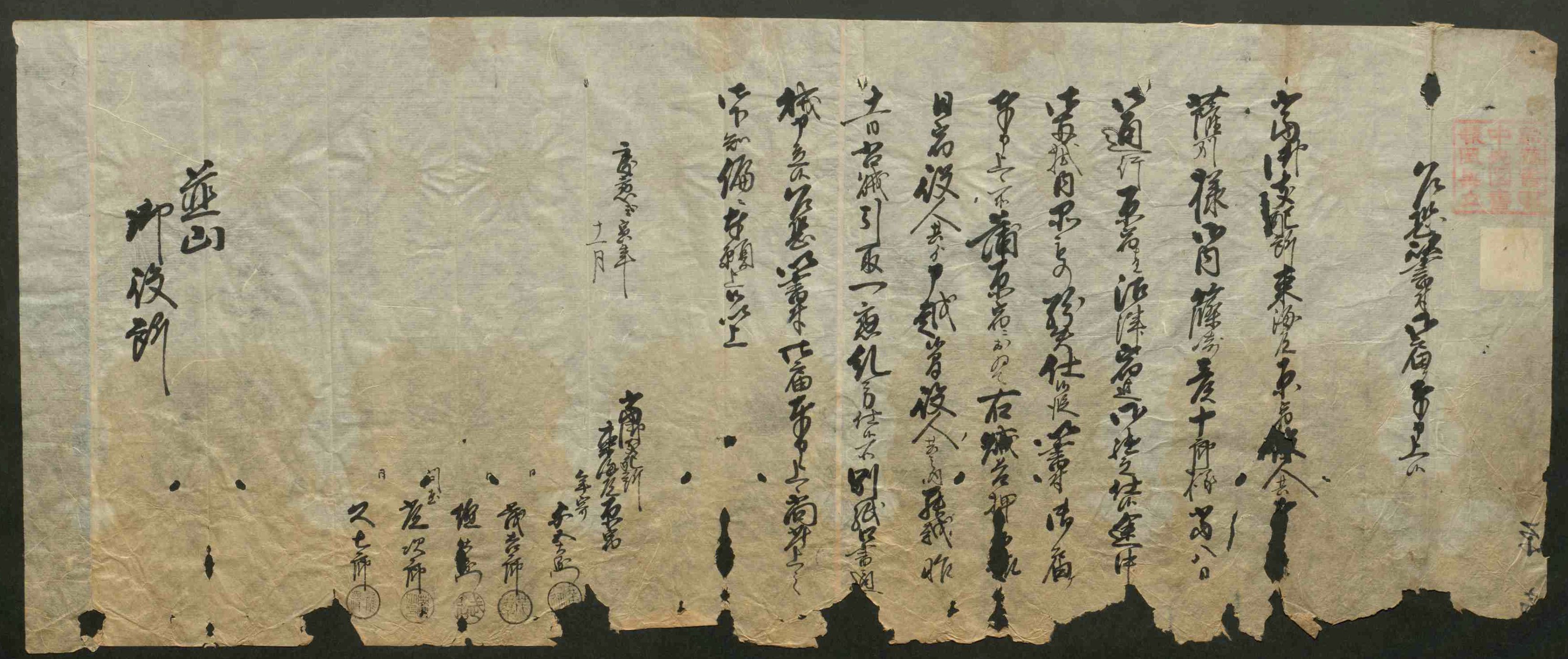
Imagawa Yoshimoto — one of the great warlords of the Sengoku period — issues a vermilion-sealed letter to "Watanabe Hachirōzaemon," directing him to manage horse and porter relay at Hara-juku. This is among the oldest surviving records of such relay service in Japan.
今川義元——戦国期の大名——が「渡辺八郎左衛門」宛に朱印状を発し、原宿での人馬継立を命ず。戦国期の人馬継立史料としても最古級。
Numazu City History, Kinsei 2沼津市史 史料編 近世2
1578
The Takeda house — the most feared military power of the era, successor to Takeda Shingen — issues a vermilion-sealed letter through Kōkokuji Castle to Watanabe Hachirōzaemon, assigning him public duty and local security at Hara-juku.
武田氏——当時最強とされた軍事勢力、武田信玄の後継——が、興国寺城を通じて渡辺八郎左衛門に朱印状を発し、原宿での公用と郷中の治安維持を命ず。
Numazu City History, Kinsei 2沼津市史 史料編 近世2
1615
Lady Oman — consort of Tokugawa Ieyasu, founder of the Tokugawa shogunate — directs Watanabe Hachirōzaemon to establish the Nichiren temple Shōgenji at Hara-juku. The same year, the family divides into two lines: the elder brother cedes the honjin (official post-station) to his younger brother Heizaemon and devotes himself to the temple.
徳川家康(徳川幕府の創始者)の側室・お万の方が、渡辺八郎左衛門に日蓮宗・昌源寺の創建を命ず。同年、家系は二系統に分かれる。長男・八郎左衛門は本陣職を弟・平左衛門に譲り、寺に尽くす。
Numazu City History, Kinsei 2, p.263沼津市史 史料編 近世2
1686 — 1769
Lifetime of Hakuin Ekaku, the monk who reshaped Japanese Rinzai Zen — his influence continues in meditation practice worldwide today. Hakuin was born in Hara-juku. He writes of Shōgenji — the temple founded by the Watanabe family — in his works Hekisōso and in the Chronological Biography of Master Hakuin.
白隠慧鶴の生涯。日本の臨済禅を改革し、その影響は現代の瞑想実践にまで及ぶ。白隠は原宿に生まれ、著作『壁生草』および『白隠禅師年譜』において、渡辺家が創建した昌源寺について記している。
Hekisōso · Hakuin Zenji Nenpu壁生草 · 白隠禅師年譜
1719 · 1745
The honjin burns down, twice. Heizaemon travels to Edo and visits the domain estates of the daimyo lords to raise rebuilding funds. His letters survive — detailed accounts of the hardship.
本陣、二度にわたって火災で焼失。平左衛門は江戸に上り、諸大名の屋敷を回って再建資金を募る。その書簡が現存——当主の辛苦を綿々と記した記録。
Watanabe Family Documents, "Edo-men Gansho-chō"渡辺家文書「江戸面願書帳」
1811 — 1837
Heizaemon Mutsuhide (seventh generation) becomes master of the honjin. From 1821, he serves as manager of the Ashitaka imperial pastures for sixteen years. Active as a haiku poet under the name "Kantei Kyoryu."
渡辺陸英(七代平左衛門)、本陣主人となる。一八二一年より十六年間、愛鷹牧の牧士。俳号「環亭去留」として俳諧に活躍。
Numazu Meiji Historical Archives, Category I沼津市明治史料館 教育・文化カテゴリー
1851
Heizaemon Muneide, nineteenth-generation descendant of Ano Zenjo, organizes the 650th memorial of his ancestor. He restores the graves of Ano Zenjo and his son Tokimoto at Daisen-ji in Ide, Numazu. The restored tombs still stand there today.
渡辺平左衛門致英、阿野全成の十九代目の末裔として、六百五十回忌を主催。沼津井出・大泉寺にある阿野全成・時元父子の墓を整備。現在も同地にその墓が残る。
Numazu Meiji Historical Archives, Hara Watanabe-ke Monjo Mokuroku沼津市明治史料館『史料目録15 原 渡辺家文書目録』
1868
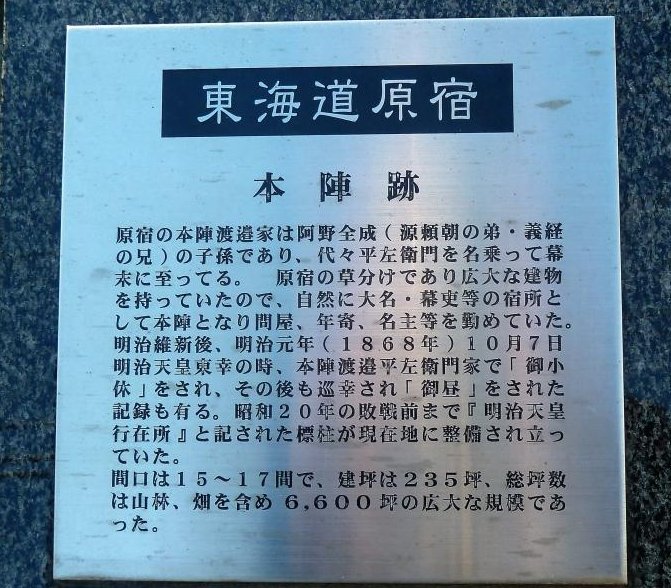
October 7. Emperor Meiji stays at the Watanabe honjin during his eastern progress — the journey that moved the imperial seat from Kyoto to Tokyo. Further visits follow during subsequent imperial progressions.
明治元年十月七日。明治天皇、東幸の際に本陣・渡邉平左衛門家で「御小休」をされる。以降の巡幸でも「御昼」の記録。
Stele installed by the City of Numazu · Numazu City History沼津市設置石標 · 沼津市史
1875 — 1884
After the great fire at Minobu-san Kuon-ji (the head temple of Nichiren Buddhism), the Watanabe house participates in the national rebuilding effort. In 1882, drafts a petition for contributions. In 1884, supports the Nichiren Daikyōin mission. Documents preserved at the Shizuoka Prefectural Central Library.
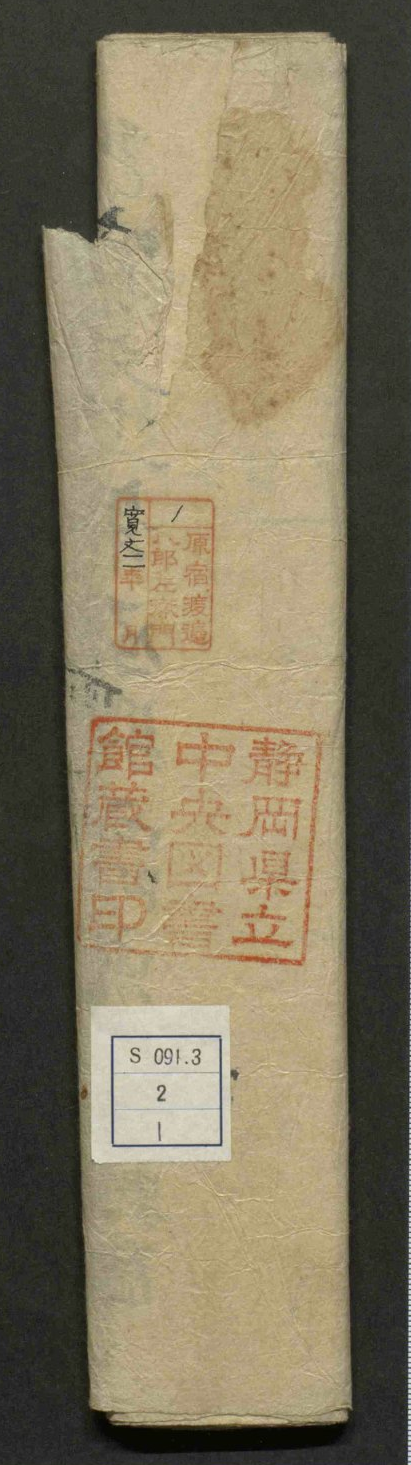
明治八年、身延山久遠寺(日蓮宗総本山)大火後、渡辺家は全国再建運動に参画。明治十五年、再建のための勧誘志願の提案書草案を作成。明治十七年、日蓮宗大教院からの布教・寄進支援にも関与。関連文書は静岡県立中央図書館に現存。
Shizuoka Prefectural Central Library · Watanabe Family Documents静岡県立中央図書館 渡辺家古文書
1945
Until the end of the Second World War, a stele reading "Temporary Residence of Emperor Meiji" stood at the former honjin site. A new stele, installed by the City of Numazu, continues to mark the location today.
第二次世界大戦終結まで「明治天皇行在所」の標柱が旧本陣跡に立っていた。現在、沼津市が設置した石標が、同じ場所にその事実を記し続けている。
City of Numazu沼津市
1979
Watanabe Hachirōzaemon Tsunejirō's diary, covering the late Edo and early Meiji periods, is published as The Diary of Watanabe Hachirōzaemon, Toiya of Hara-juku by the Numazu Municipal Suruga Library.
渡辺八郎左衛門常次郎(幕末〜明治)の日記が、『原宿問屋渡辺八郎左衛門日記』として沼津市立駿河図書館より刊行される。
Numazu Municipal Suruga Library沼津市立駿河図書館